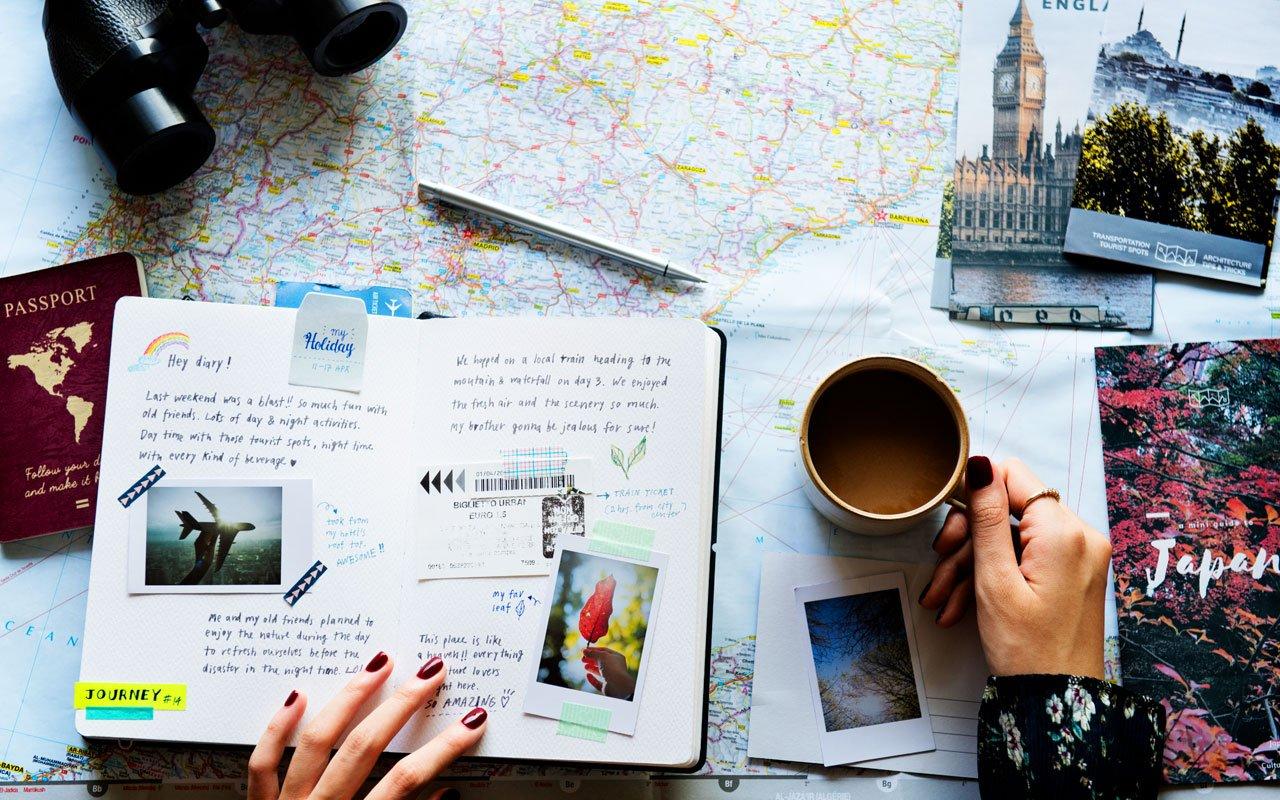
A travel journal can become much more than a collection of dates, destinations and ticket stubs. It can preserve the small details that photographs often miss: the taste of a dish you tried for the first time, a conversation with a stranger, the wrong turn that led to an unexpected discovery or the feeling of arriving somewhere completely new. The secret to keeping a journal you’ll enjoy reading years later is to make it personal, practical and easy enough to maintain throughout your trip.
Why Keep a Travel Journal in the First Place?
Travel often feels vivid while it is happening, but memories gradually lose their detail. You might remember visiting a beautiful city without recalling the name of the little café where you spent a rainy afternoon. A journal helps preserve the moments that make a trip unique, including experiences that would never make it into a typical holiday photo album.
Writing also encourages you to pay closer attention to your surroundings. When you stop to describe a busy market, a quiet train journey or an unfamiliar neighbourhood, you begin noticing details you might otherwise overlook. Your journal becomes a record of how you experienced a place, rather than simply a list of places you visited.
There is another benefit: a travel journal gives you space to reflect. You can record what surprised you, what challenged you and what you learned about yourself along the way. These personal observations often become the most interesting parts to revisit long after you have returned home.
Choose a Journal That Suits Your Travel Style
The best journal is the one you will actually use. A beautiful hardback notebook may appeal to someone who enjoys handwriting, while a small pocket notebook might suit a traveller who prefers to write on trains or during short breaks. If you travel light, a notes app on your phone can be just as effective.
Think about your destination and daily routine before choosing a format. A walking holiday, a multi-city itinerary and a relaxing week by the sea create very different opportunities for writing. Convenience matters more than appearance, especially when you are tired, moving between destinations or trying to fit your journal into a busy day.
Consider these options before you leave:
- A paper notebook: ideal for handwriting, sketches, ticket stubs and notes without needing a charged device.
- A digital journal: useful for travellers who want to type quickly, search previous entries and keep notes alongside photographs.
- A voice memo: helpful when you want to capture an impression immediately but do not have time to write.
- A scrapbook-style journal: a good choice for anyone who enjoys combining short entries with maps, postcards and other keepsakes.
You do not need to commit to one method forever. Some travellers write in a notebook during the day and transfer their favourite observations into a digital collection later. The important thing is to choose a system that fits your habits instead of creating another task to manage.
What Should You Write About?
One of the biggest obstacles to travel journaling is the feeling that every entry needs to be interesting, detailed or beautifully written. In reality, a few specific observations can tell a better story than several paragraphs describing everything you did. Start with something that caught your attention and explain why it stayed with you.
Specific details bring memories back to life. Rather than writing that a restaurant was good, describe the freshly baked bread, the crowded tables or the waiter who recommended a dish you had never tried. Instead of saying a town was beautiful, record the colour of its buildings, the sound of church bells or the smell of rain on old stone streets.
If you are unsure where to begin, use a few simple prompts to get your thoughts moving.
- What surprised me most today?
- What did I see, hear, smell or taste that I want to remember?
- Did I discover somewhere I would never have found in a guidebook?
- What conversation or encounter made me think differently?
- What was difficult, funny or unexpectedly rewarding?
- What would I tell a friend about today if I had only one minute?
You do not have to answer every question. Pick the one that brings a memory to mind and write a few lines about it. A single vivid moment can be enough to make an entry worth revisiting.
Record the Ordinary Moments, Not Just the Highlights
It is tempting to fill a travel journal with major attractions, famous landmarks and once-in-a-lifetime experiences. Those events deserve a place, but everyday moments often become just as meaningful with time. Waiting for a delayed train, getting lost on the way to dinner or watching locals go about their daily routines can reveal something memorable about a destination.
Try recording the rhythm of an ordinary day. What time did the streets become busy? What did people eat for breakfast? Was public transport easy to navigate? Did you notice a local custom that was unfamiliar to you? These small observations help recreate the atmosphere of a place far more effectively than a list of sightseeing stops.
It is also worth writing about the less polished parts of travelling. You might describe a disappointing meal, a long queue or a day when everything seemed to go wrong. With hindsight, these experiences can become funny stories or useful reminders about what you would do differently next time.
Honesty makes a journal more interesting than a perfect travel narrative. You are recording your experience for yourself, so there is no need to make every destination sound wonderful or every day feel productive.
Use Photos, Tickets and Maps to Tell a Bigger Story
Words are only one way to preserve a journey. Photographs, transport tickets, postcards, museum leaflets and handwritten notes can help you remember details that might otherwise disappear. Adding a few physical keepsakes can also make a paper journal feel more personal when you open it again years later.
Choose items that have a connection to a particular memory rather than collecting everything you encounter. A receipt from a memorable family-run restaurant may mean more than a handful of generic brochures. The story behind an object is what gives it value, so add a short caption explaining why you kept it.
For a digital journal, you can use the same principle by pairing selected photographs with brief descriptions. Instead of adding twenty similar pictures of a landmark, choose one that captures the atmosphere and explain what was happening when you took it.
Keep practical considerations in mind when collecting souvenirs. Avoid taking objects from protected natural or historic sites, and be respectful when photographing people. A journal should preserve meaningful experiences without compromising someone else’s privacy or the places you visit.
How to Keep Writing When You Have a Busy Itinerary
A full day of sightseeing can leave very little energy for writing. If you expect yourself to produce a detailed account every evening, journaling may quickly feel like homework. A more sustainable approach is to capture a few notes during the day and turn them into a short entry whenever you have time.
Consistency does not require long entries. Five minutes can be enough to record a memorable conversation, the name of a restaurant or something you want to remember about the day. If you are exhausted, write three bullet points and leave the longer reflection for another time.
These habits can make journaling easier to maintain:
- Keep your notebook or phone somewhere accessible rather than buried in your luggage.
- Write a few keywords during breaks so you do not forget names or details.
- Choose a regular moment, such as breakfast or the journey back to your accommodation.
- Use voice notes when typing or handwriting feels inconvenient.
- Skip a day when necessary and return to the journal without trying to make up for every missed entry.
There is no need to document every hour of a trip. Sometimes the best decision is to put your notebook away and enjoy what is happening around you. The experience itself comes first; the journal exists to preserve it, not to compete with it.
Make Your Entries Personal and Memorable
When you look back at an old journal, your own reactions may be more interesting than a description of the destination. Record what you expected before arriving and whether reality matched those expectations. Write about what made you laugh, what tested your patience or what you would like to explore further.
You can also include a few details about the person you were at the time. Were you travelling alone for the first time? Trying unfamiliar food? Learning to navigate a city independently? Context helps future you understand why an experience mattered, even when the original memory has faded.
Try ending an entry with one short sentence about the day. It could be a lesson you learned, something that made you grateful or a question you are still thinking about. These closing reflections can create a thread through your journal and reveal how your perspective changed during the trip.
Do not worry about writing elegantly. Your natural voice, unfinished thoughts and occasional mistakes are part of the record. A journal that sounds like you is much more rewarding to reread than one written to impress an imaginary audience.
Turn Your Travel Journal into a Keepsake After the Trip
Once you return home, give yourself time to revisit what you recorded. You might notice recurring themes, discover a favourite moment you had forgotten or realise that a place affected you more than you expected. Reviewing your entries can also help you identify experiences you would like to repeat or destinations you want to explore next.
You do not need to rewrite the entire journal or turn it into a polished book. A little organisation goes a long way. Add missing dates, label photographs, write down the names of places you forgot to identify and group loose keepsakes with the relevant entries. For a digital journal, consider making a backup so the memories remain accessible.
If you enjoyed the process, you could create a short end-of-trip summary with your favourite discoveries, best meals, most useful lessons and recommendations for future visitors. This can be especially helpful if you return to the same destination or want to share practical advice with friends and family.
Over time, your journals can become a personal archive of different places, stages of life and changing interests. Even a modest collection of short entries can offer a surprisingly rich picture of how you experienced the world.
Start Small and Let the Journal Grow Naturally
You do not need a special notebook, a complicated template or a daily writing routine to begin. Choose a format you enjoy, record one or two details that matter to you and let the habit develop at its own pace. Some days will produce a full page of reflections; others may amount to a single sentence and a photograph.
The most rewarding travel journal is an honest one. It captures the moments you might otherwise forget, preserves the details that made a place special and reflects how the journey felt to you at the time. Start with your next trip, keep the process simple and write for the person who will be reading it years from now: you.